As English language development teachers, we do way more than teach vocabulary; we teach students how to use language to communicate, learn, and think. That’s where the Language Function Board comes in.
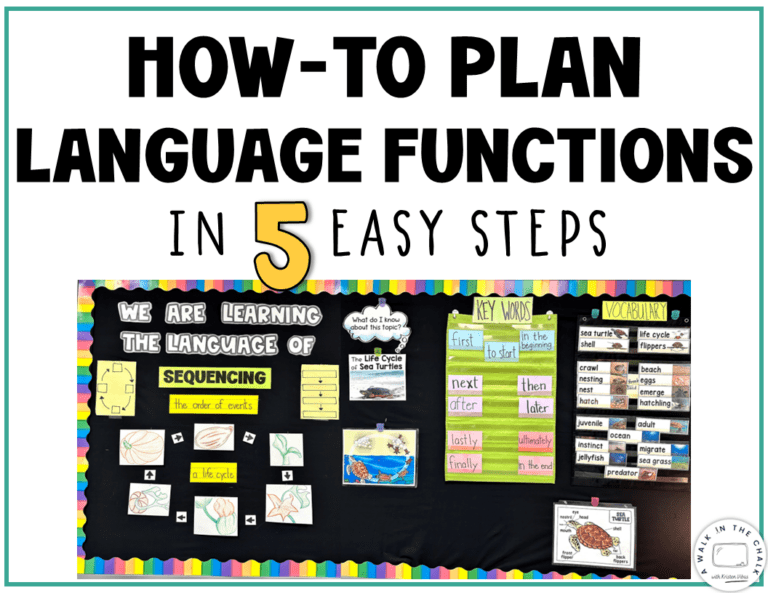
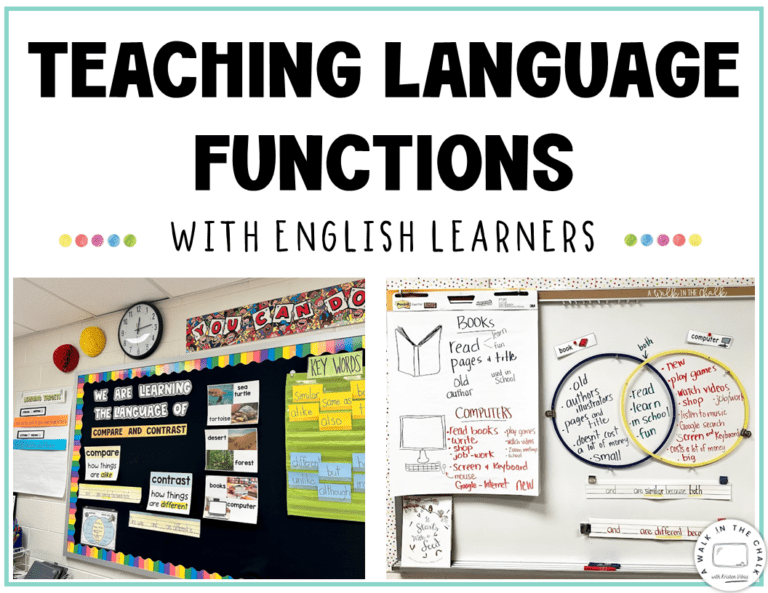
A Language Function Board is a visual anchor, or focal point, in the ELD classroom that highlights a specific purpose of language, or language function, such as describe, compare, explain, or persuade. It’s where the function is first introduced and where students can reference throughout a unit.
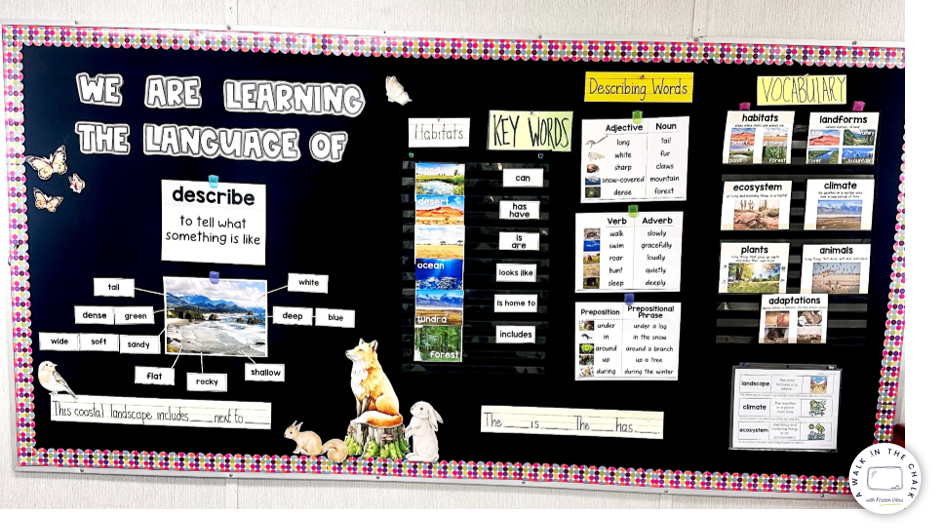
Each board focuses on one function and includes:
Displayed on your classroom wall, the board becomes a living reference tool that helps students access and use academic language throughout instruction of a language function unit.
Language functions are the “why” we use language. They answer questions like:
How do we describe what we see?
How do we compare two ideas?
How do we explain cause and effect relationships?
When we explicitly teach language functions, we are using academic language purposefully. This supports growth across all four language domains of listening, speaking, reading, and writing, and best of all, it provides a pathway to language proficiency for English learners.
To read more about teaching language function, check out this blog post.
Language Function Boards make academic language learning visible, accessible, and usable.
They help students:
And they help teachers:
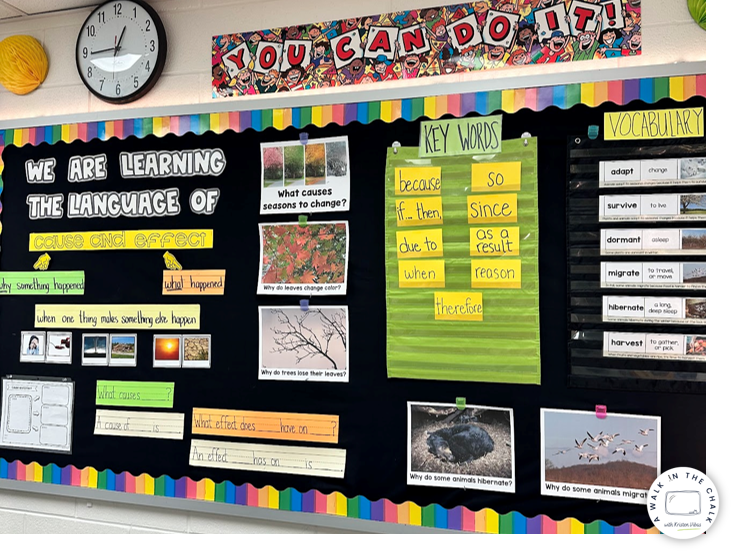
When students know how to use language to accomplish a task, whether it’s describing a habitat, comparing two characters, or explaining a process, they can participate meaningfully in classroom conversations and academic writing.
I created the idea of Language Function Boards in order to provide my students with a visual reference tool that supported the learning target. They’re simple, visual, and adaptable to any content area.
When you post one in your classroom, you’re giving students a daily reminder that language is a tool they can use to think, learn, and express themselves.
Whether your instructional space is small or large, making a dedicated board to highlight the key elements of a language function keeps the instructional focus front and center for both students and teacher.
This is one of my first boards in a small space. It was on a cloth like partition wall, so I used t-pins to hang the background and tape to attach the pieces.
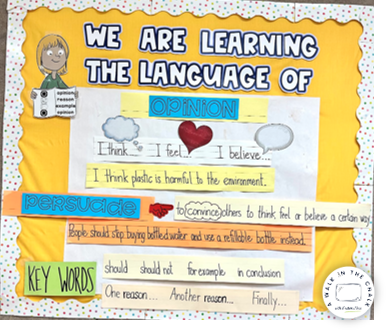
Here’s my board in a “larger” space. Let me tell you, a large bulletin board is gold when creating language function boards! When I first saw this board in my new room a few years ago, I got super excited about expanding my boards. 🤩
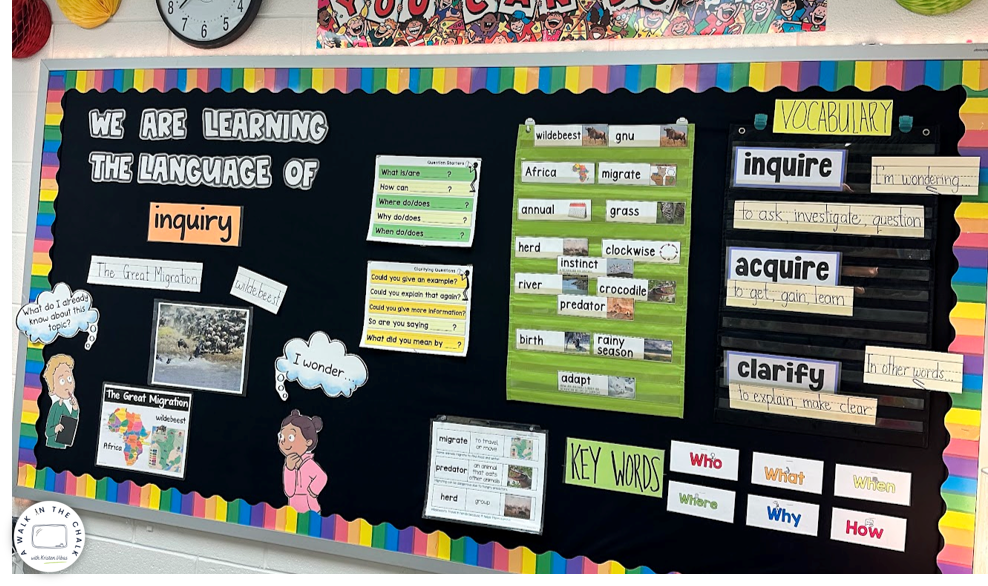
As my instructional space changes, so do my boards. Now I use a wall as my language function board;) The wall is like plywood, so I staple and use push pins to hang items.
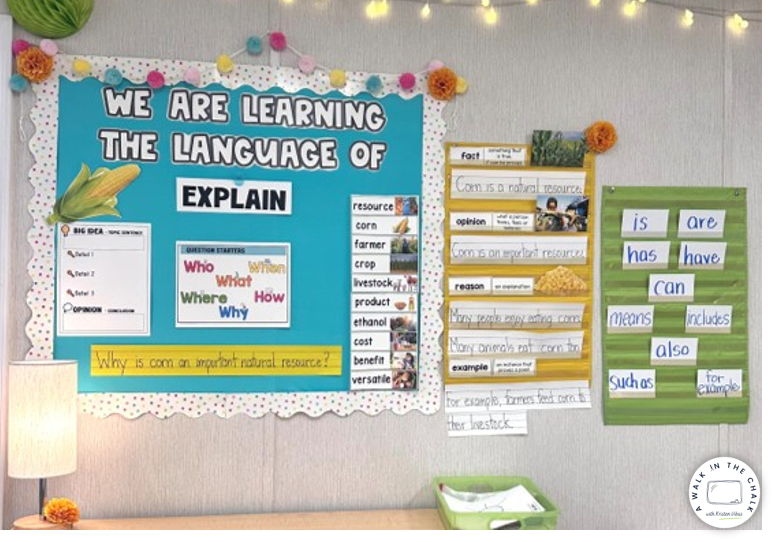
Here are a few simple ways to make the most of your boards:
Language function boards don’t need to be fancy, they just need to be useful. What tools will students need to successfully practice using the function?
My first language function board was small and included 1- an introduction to the function, 2- key words or signal words and 3- sentence frames. It has evolved to include more visuals and content vocabulary.
✨The evolution of the language function board.

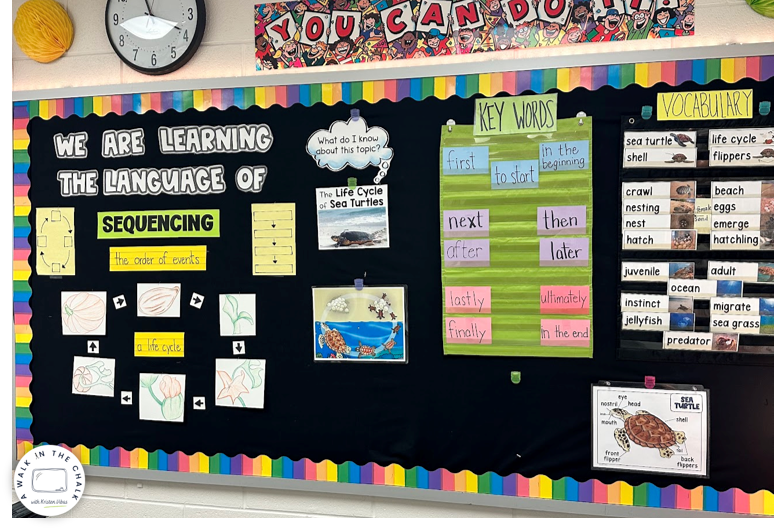
Want to create your own language function board? Start by downloading this free resource!
When I started to focus my teaching on language functions, I not only saw a shift in my own approach to teaching, but a shift in the language production of my students. My guiding light as an ELD teacher is the function of language, and I’ll always stand by the importance of explicitly teaching MLs the functions needed to successfully comprehend and use academic language with purpose and confidence.
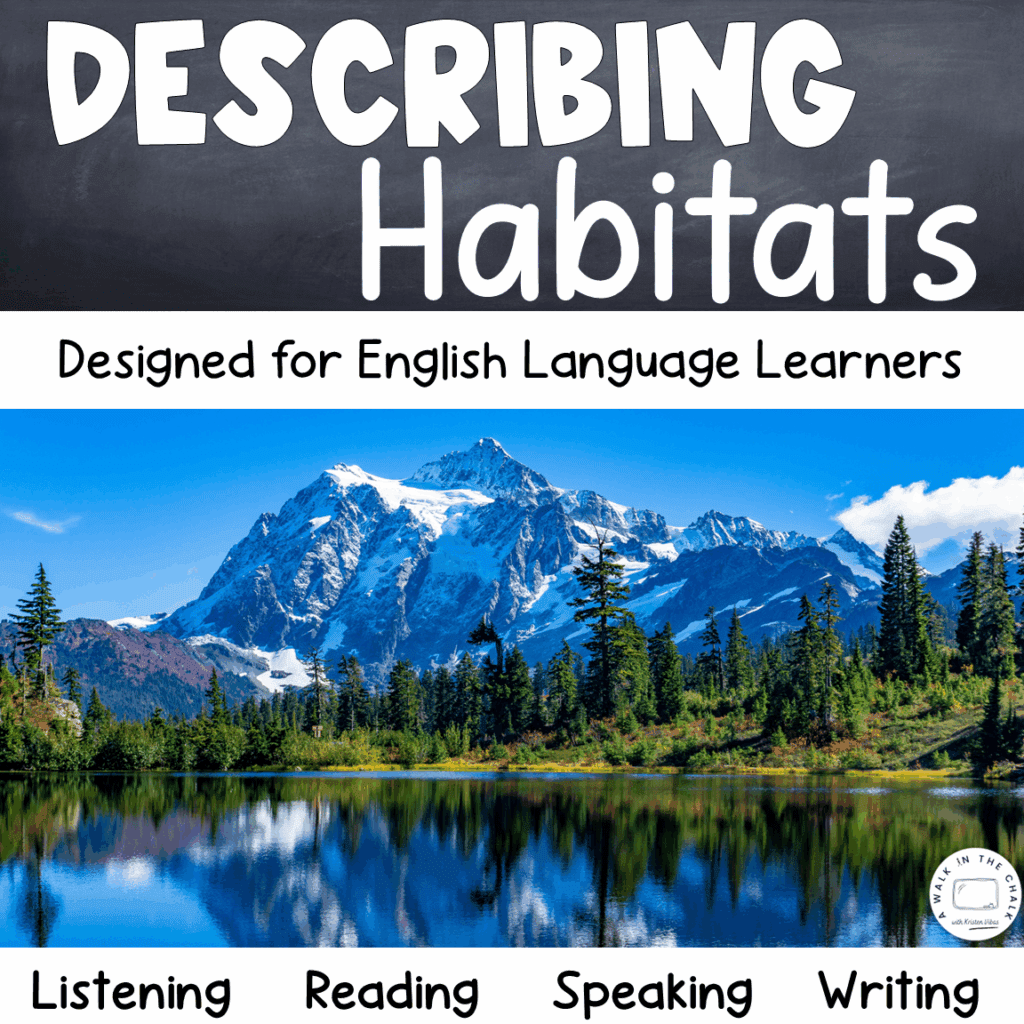
Below are some of my language function units.
Happy teaching,
Kristen