
Kick off the school year with 3 powerful GLAD strategies—Three Personal Standards, Numbered Heads Together, and Observation Charts. Build classroom community, engage multilingual learners, and support language development from day one.
The first weeks of school set the tone for classroom routines, expectations, and community. As ELD teachers, we want strategies that not only build language but also foster collaboration and inclusion right away. Project GLAD® (Guided Language Acquisition Design) offers a variety of powerful, student-centered strategies. Here are three (plus one bonus) that I recommend using at the start of the year to engage multilingual learners in their general education classrooms and set the stage for success.
The 3 Personal Standards—Show Respect, Make Good Decisions, and Solve Problems—are a cornerstone of GLAD. Instead of lengthy lists of rules, students internalize broad principles that apply across situations.
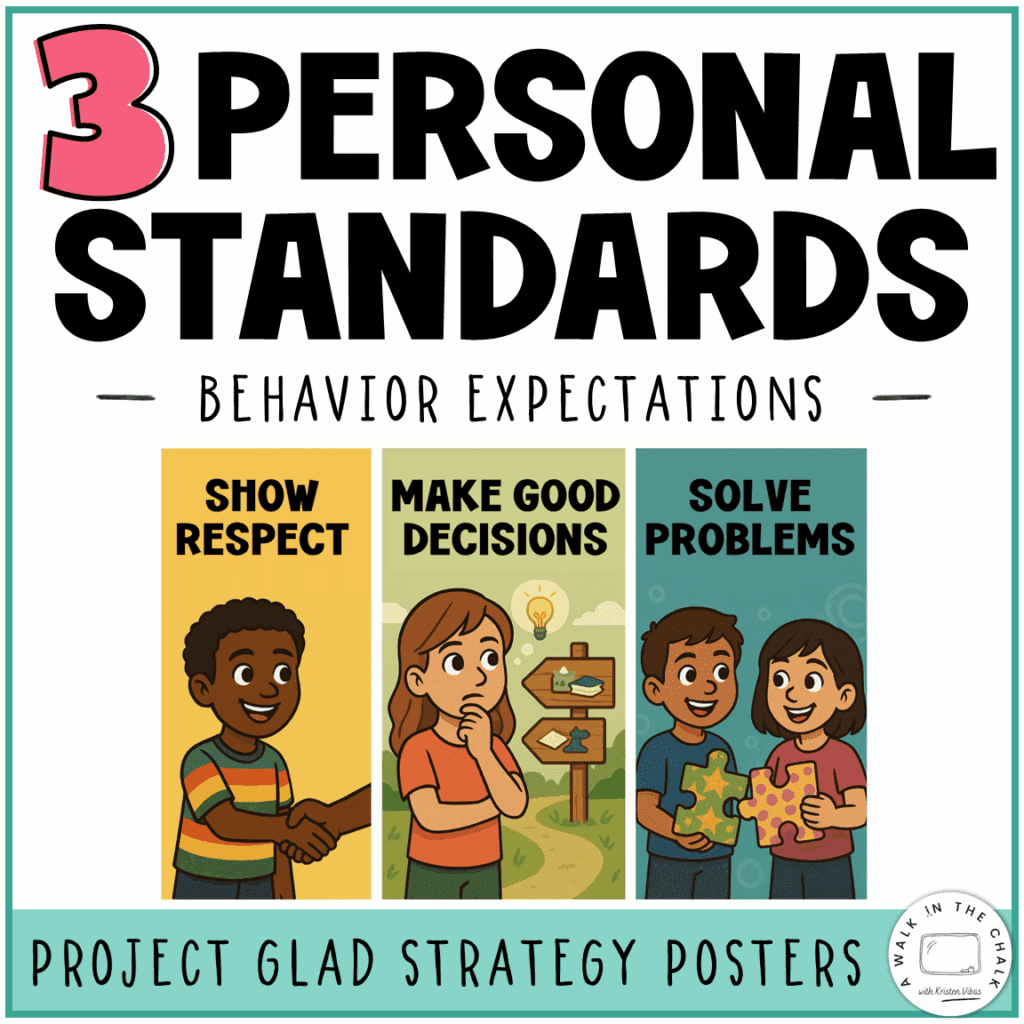
Grab this poster to provide students with a visual reminder of classroom behavior expectations.👆🏼
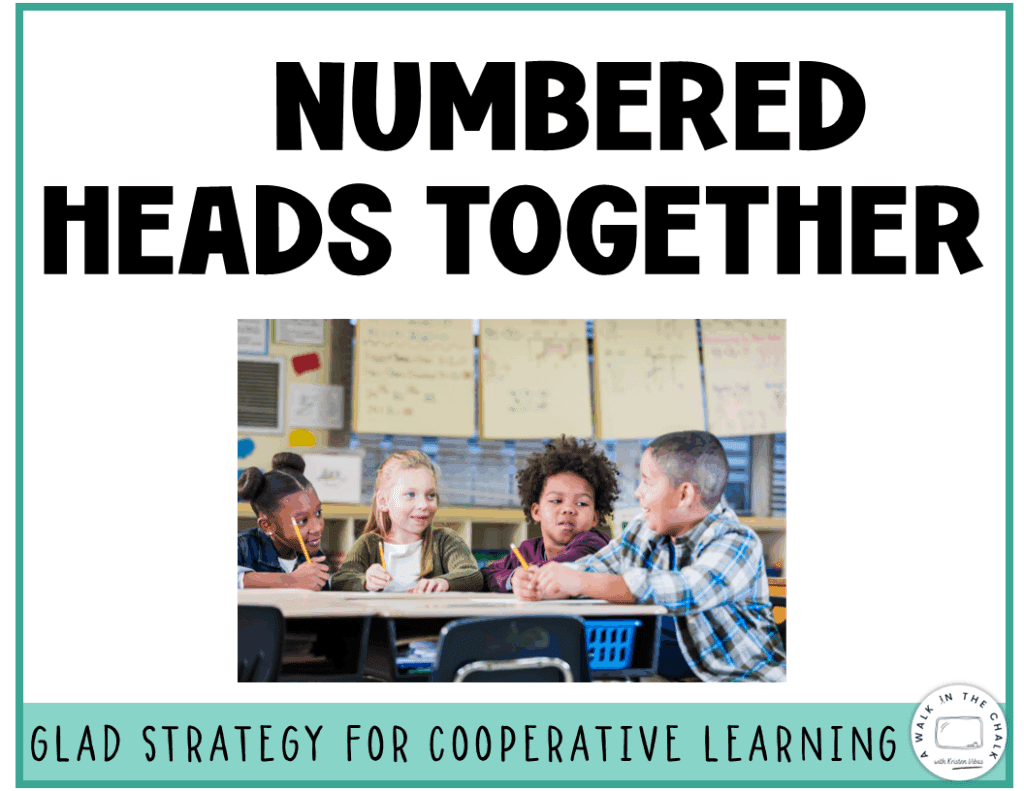
This cooperative strategy gets all students engaged for learning and sharing. Students work in groups, discussing a question or problem. After the discussion, the teacher calls a random number pulled from a cup, and the student with that number becomes their group’s spokesperson.

Heterogenous groupings with a mix of proficiency levels allows for students to support each other.
It’s important to teach students how to collaborate when introducing this strategy. If a newcomer’s colored numbered stick is called, that student will need the support of a sentence frame AND the support of his/her group members in order to orally respond to the question posed. With the proper supports, newcomers can respond;)
That’s the beauty of this strategy, every student is held responsible for participating, and group collaboration skills are established and practiced from the start of the year.
Grab this colored numbers freebie.👇🏼
Observation Charts are a collection of photos posted around the room. Students circulate with a partner (or trio), discuss, and write their observations, questions or predictions directly on the charts. Students are also instructed to carry just 1 pencil between the pair. As they go from chart to chart, the pass the pencil, taking turns being the scribe.
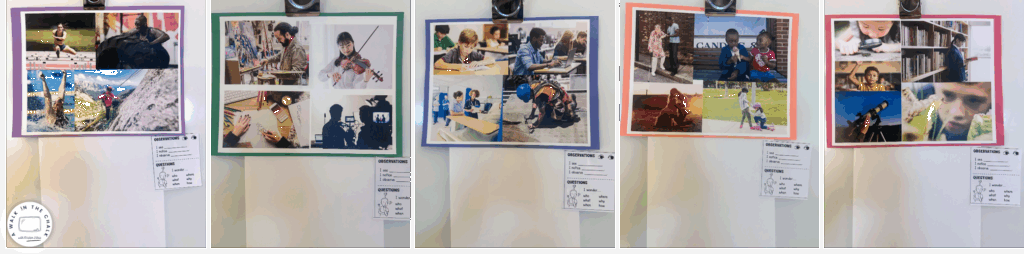
The observation charts above are from an ELA unit that focused on character traits. Below are examples of science (landforms) and math (whole numbers, decimals & fractions) observation charts. I don’t tell students what the theme is until afterwards, I just want them noticing and exploring the images.

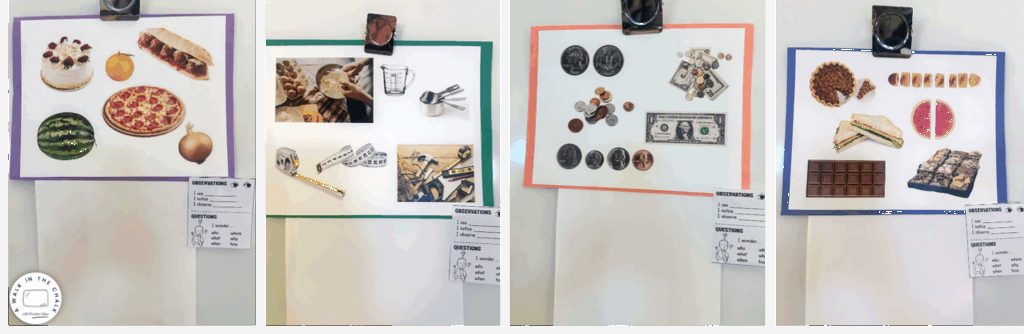
This is an effective strategy to incorporate at the start of a new unit because it gets students tapping into their prior knowledge and building curiosity around the content ahead.
Grab the Observation Chart Sentence Starters here! 👈🏼
A BONUS Strategy – Home/School Connection Letters are a wonderful way to strengthen partnerships with families and extend learning beyond the classroom. These letters invite families to engage in conversations about classroom themes in ways that honor students’ languages, cultures, and experiences.
Tip: Include translated letters for families with a correspondance language other than English. Translations can be copied on the back of letters.
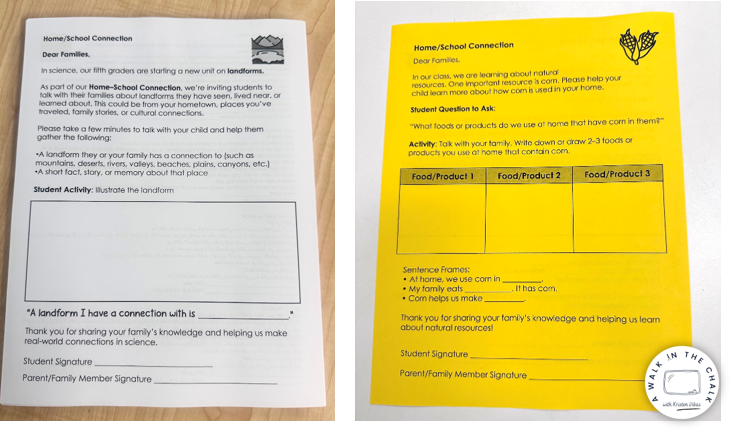
Short on time (who isn’t?!) — use AI to help write the letters, then revise and personalize as needed. Add a sketching activity for students to complete. Here’s an example of a prompt I gave Chat GPT to help me construct my Benchmark Unit 1 letter for our 5th grade class.
“Help me create a home to school connection letter using the glad strategy for benchmark express unit one grade 5. Think of a question students could go home and ask family members about that builds interest and background information on the topic of corn.”
Starting the year with GLAD strategies like 3 Personal Standards, Numbered Heads Together, Observation Charts, and Home–School Connection Letters helps establish classroom community, promote engagement, and build academic language. They’re flexible, supportive, and inclusive—making them ideal for multilingual learners and their peers.
ELD teachers, this is an effective way to support gen ed teachers in getting structures in place that support ALL learners;) Pick one and share it with your gen ed counterparts.
For more beginning of the year ELD Teaching Tips, check out this post.🌟
Happy teaching–