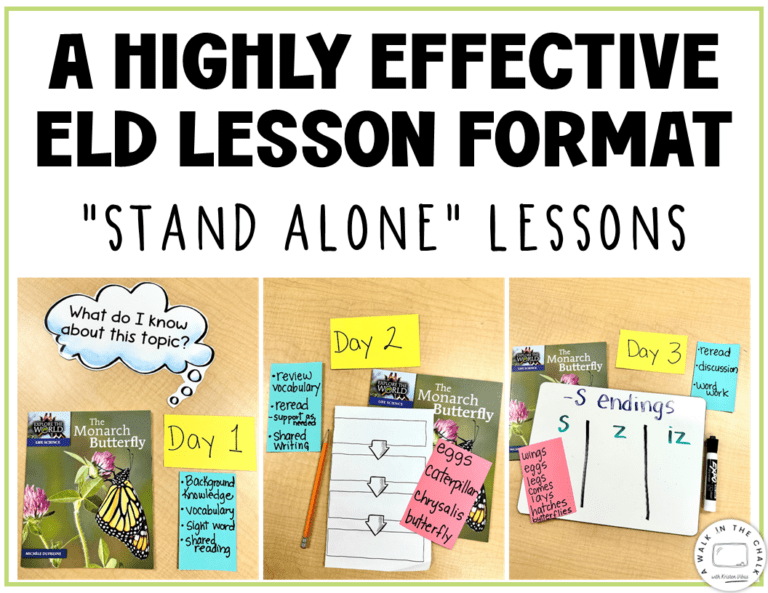

📓 A staple in my ELD instruction is the use of student notebooks. The beginning of the school year is the perfect time to set the tone for organization, routines, and meaningful learning. One of my favorite—and most effective—tools in the ELD classroom is the use of student notebooks.
Every one of my students gets a notebook, and together we turn it into a powerful tool that not only organizes our work but also tracks growth over time.
I use notebooks for one simple reason: they capture the story of my students’ progress.
Throughout the year, this ELD notebook becomes:
Instead of flipping through piles of loose papers or searching through digital files, I have everything in one place—organized, chronological, and personalized for each student.
I section notebooks with tabs. This makes it easy for students to find what they are looking for. The tabs I choose depend on the groups. All groups have a Reading and Writing tab, but some groups also have Phonics/Word Work or Grammar tabs. Typically this is how I tab my notebooks…
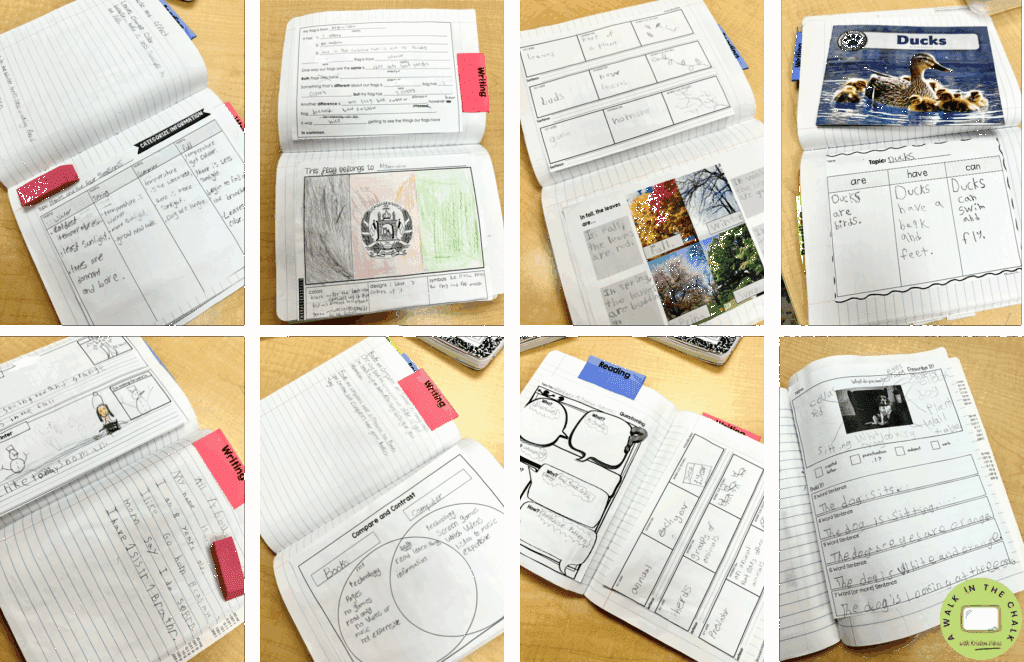
Just about EVERYTHING we do in ELD class goes in the notebook. Materials that are printed out, like graphic organizers, articles or anchor charts, get shrunk down to 75% and glued in. Here are some examples of activities found in my students’ notebooks.
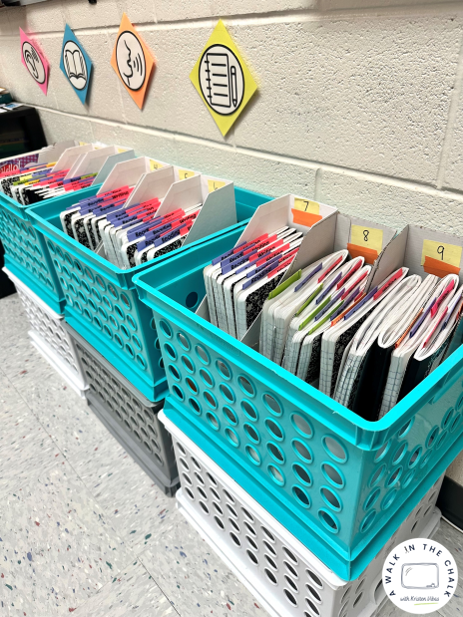
I keep student notebooks in my classroom. Since we use them during every class, I don’t want students forgetting to bring them, or take a chance on them getting misplaced. For the past couple of years I’ve been storing them in crates. Inside the crates are magazine boxes which hold each group’s notebooks. The magazine boxes are numbered with group numbers, making it easy for me to pull out the notebooks needed for each class.
The notebook’s main purpose is to serve as a portfolio of all the work students do in my class. This includes:
Not only does it provide me with evidence of student growth, but it also helps drive my instruction. I gain anecdotal evidence while my students are working in their notebooks that dictate which lessons need additional focus and which skills need more practice.

By the end of the year, each student has a personalized portfolio of their work. I can flip through and point to real examples of growth—not just test scores. Parents can see their child’s work evolve, and students feel a sense of pride looking back at where they started.
My students really enjoy their notebooks and take pride in the work they do in them. The fun colorful cover page, which I print out on Avery labels #5126, plus the brightly colored tabs provides a joyful feel to our daily work on building English language skills. Although putting together 50 notebooks can be time consuming, the benefit greatly outweighs the cost.
The notebook is more than paper and tabs—it’s a record of progress, a resource for learning, and a celebration of growth.
A staple instructional tool in my English Language Development classroom; I highly recommend incorporating the use of notebooks into your classroom routines.
Below are the covers and tabs I use for my student notebooks.

Want to take a peek inside my ELD classroom and get tips for setting up with the 5 must-have elements I can’t live without? Check out my ESOL Classroom Set Up Tips.
Have a great school year:)

Note – the links to the labels and cardstock are affiliate links from my Amazon Storefront.