


If you’ve ever asked your students to “write a summary” and been met with blank stares… you’re not alone. Summarizing asks students to figure out what’s most important and explain it clearly, which can be especially tricky for English language learners. That’s why using a clear structure like the SWBST summarizing strategy can make such a big difference.
Summarizing requires students to:
That’s a lot to ask.
And without the right support, summarizing can quickly turn into:
Over the years, I’ve found that the key to asking students to “summarize”—is giving them a clear structure for how to do it.
This strategy consistently works in my classroom.
SWBST — Somebody, Wanted, But, So, Then
SWBST breaks a story into five simple parts:
Instead of trying to retell everything, students focus on the most important parts of the story.
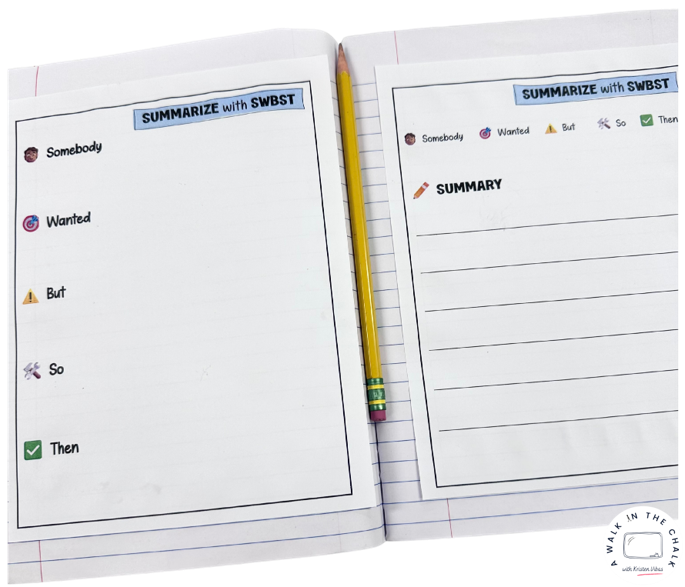
This summarizing strategy is especially powerful for ELs because it:
Students don’t have to guess what to include. The thinking is already organized for them.
Instead of producing long summaries, students can focus on one idea at a time.
Students can practice talking through their summary before writing it.
Even beginner-level students can participate using sentence frames and visuals.
One of the biggest shifts I’ve made in my teaching practice is building oracy before literacy, and that means building students’ listening and speaking before reading and writing.
Before writing anything, students orally practice summarizing stories.
“Somebody was ____. She/He wanted ____. But ____. So ____. Then ____.”
This gives students time to:
By the time they write, the thinking is already there.
Another way to make this strategy stick is by making it interactive. This activity always gets high engagement, especially from my beginning and developing ELs.
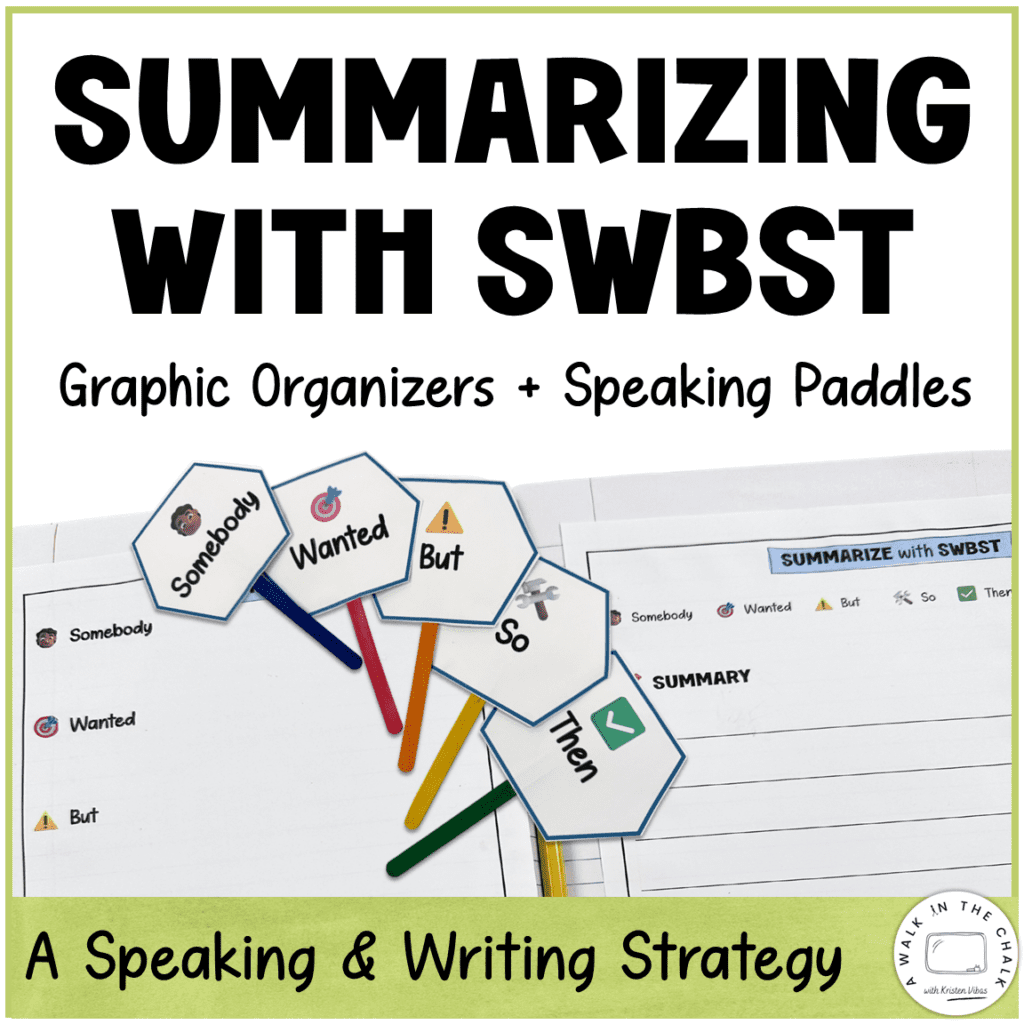
In my classroom, I use:
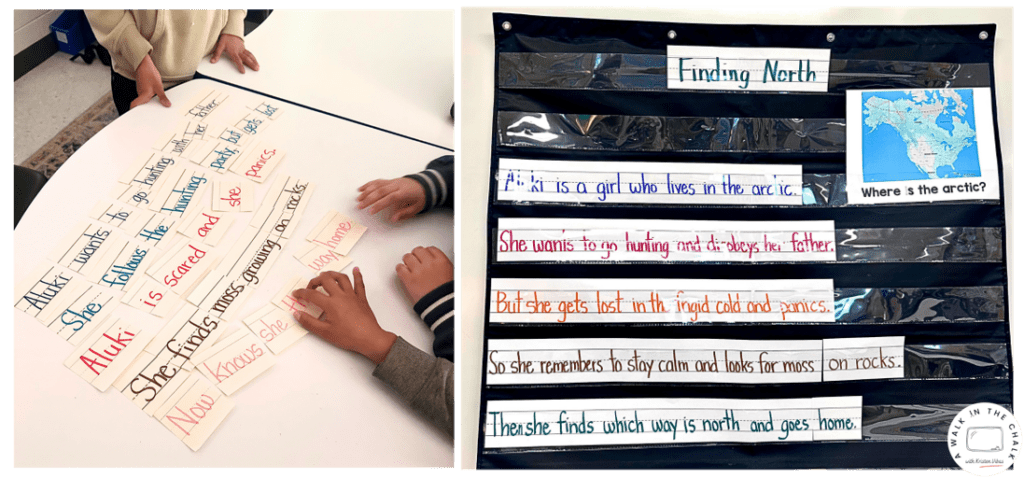
I write the sentences out, have students read them and put them in order. Next, I cut the sentences apart and have students put them back together (sentence structure) and read the sentences again. Students are physically manipulating the parts of the story, which helps them:
And honestly… they love it.
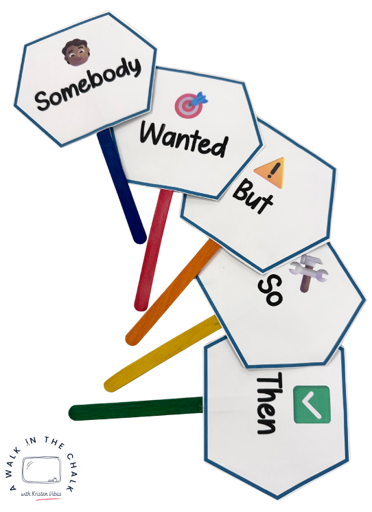
Using the speaking paddles in a small group is a fun way for students to practice sharing the task of summarizing, each taking a part of the summary. Let me add that this also makes for a fun warm-up activity to any ELD lesson! Students learn the structure then have a lot of fun creating SWBST scenarios together.
Depending on the students’ needs, an additional scaffold is color coding the sentence strips with an anchor chart or speaking paddles.
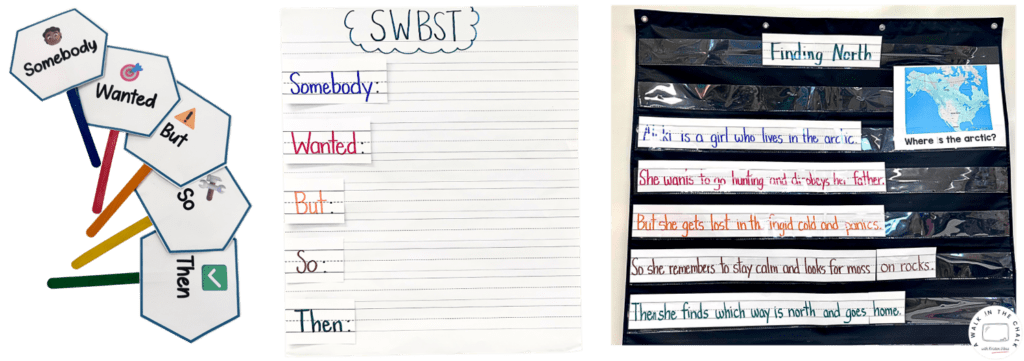
SWBST is not the end goal—it’s the support that gets students there.
Over time, you can:
But in the beginning, that structure is everything.
If you’re interested in more ways to support your students through scaffolding, you might also find this post on scaffolding for multilingual learners helpful.
If you’re looking to try this strategy, start small:
Keep it consistent, and you’ll start to see your students:
👉 organize their thinking more clearly
👉 use more complete language
👉 and feel more confident summarizing
Summarizing doesn’t have to be complicated.
When we give students a clear structure and the chance to talk through their thinking, we make the task more accessible—and more meaningful.
SWBST is one of those strategies that’s simple, but incredibly effective… especially for multilingual learners.
If you’d like to try this summarizing strategy in your classroom, I’ve created a resource that includes:
Happy teaching!