The first few weeks of school are more than learning names and establishing routines—they’re about helping multilingual learners feel seen, heard, and confident enough to use English.
For many students, walking into a new classroom means learning new structures, meeting new classmates, and trying to communicate in a language they’re still developing.
That’s why I try to make our “getting to know you” activities do more.
They become opportunities to build community and build language.
Here are some of my favorite activities that encourage students to talk, listen and notice similarities from the very first week of school.
Before asking students to share about themselves, I always model first.
I create a simple slide about my family, pets, favorite foods, hobbies, and places I enjoy visiting.
As I introduce myself, students aren’t expected to talk yet—they’re simply listening and making connections.
Then I ask questions like:
This immediately gets students participating, even if they only respond with gestures or one-word answers.
Why it works: Modeling lowers anxiety and gives students a clear example of the language they’ll eventually use themselves.
These are one of my favorite beginning of the year activities because they naturally differentiate for different language levels.
Students complete one of several versions:
Instead of answering long questions, students represent themselves using simple categories.
For example:
Beginning English learners can simply label each section.
More advanced students can expand by explaining why each number is important.
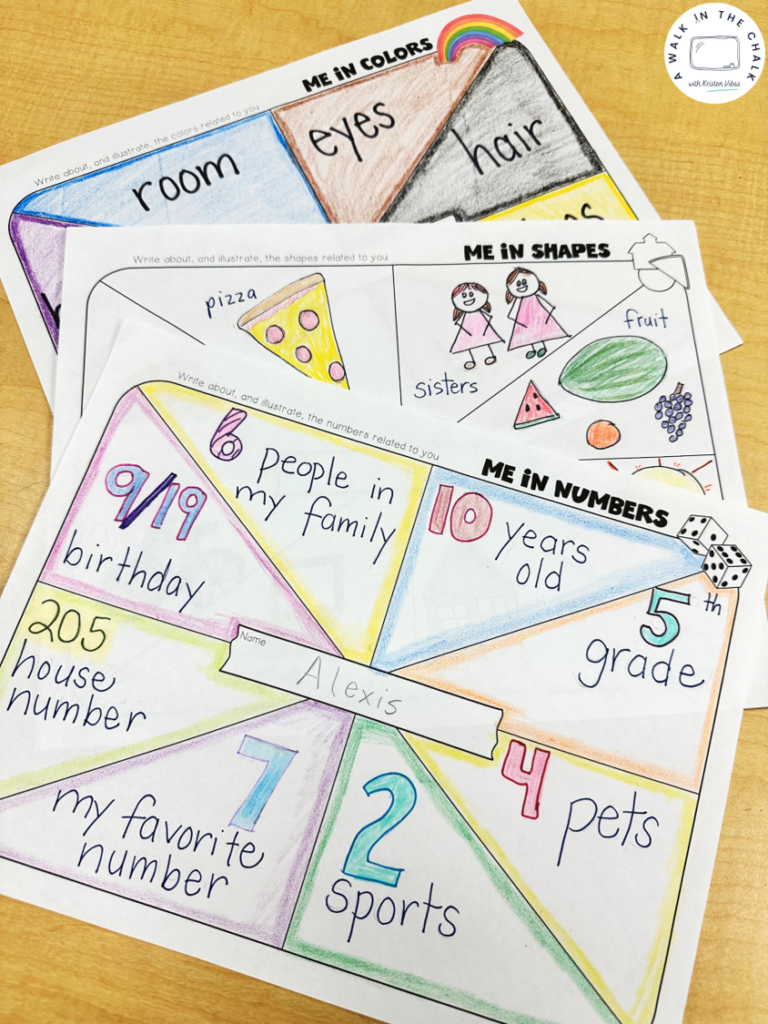
Once students have shared about themselves, it’s time to help them connect with one another.
Display one student’s page and ask questions such as:
Students begin discovering similarities that naturally lead to conversations.
Instead of simply introducing themselves, they’re learning about each other.
For multilingual learners, these shared experiences provide authentic reasons to communicate.
One of the most meaningful conversations we have during the first week is about names.
Names are part of a student’s identity.
Rather than immediately trying to pronounce everyone’s name perfectly, I invite students to become the expert.
Students can share:
Then we practice saying each student’s name correctly together.
One simple routine I love is:
This small routine sends a powerful message.
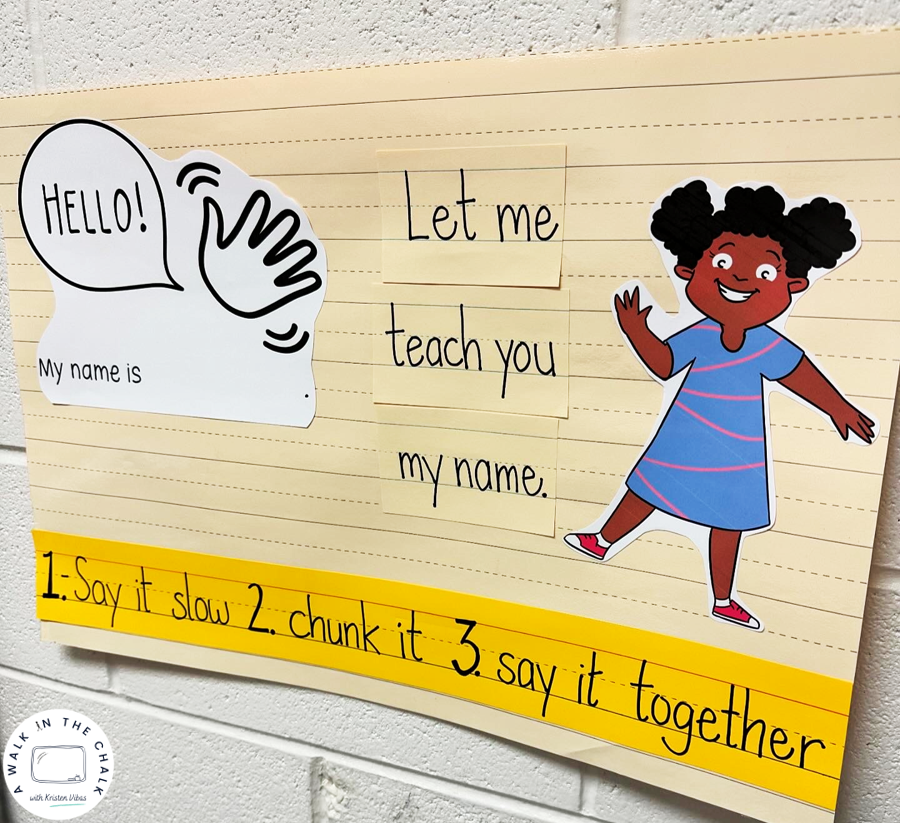
Your name matters activity – free download
This may be the biggest shift I’ve made over the years.
Instead of having students complete an activity and move on, I intentionally build in opportunities for talk.
Students might practice saying:
I have…
My favorite ______ is…
We both like…
We both have…
We are different because…
These structured conversations give students repeated opportunities to practice the vocabulary they’re learning.
Remember:
👉🏼 Oral language comes before writing.
One activity can work for every proficiency level with a few simple adjustments.
Examples:
“I have two brothers.”
“My favorite food is pizza.”
Encourage students to add details.
“My favorite food is pizza because I eat it every Friday.”
Invite students to compare, explain, and elaborate.
“My favorite place is the beach because my family visits every summer. I enjoy collecting shells and swimming in the ocean.”
The first weeks of school are filled with back-to-school activities that help students get to know each other.
For multilingual learners, those same activities can also become powerful language-learning opportunities.
With a little planning, getting-to-know-you lessons can help students:
When students feel safe enough to communicate, language learning becomes much easier.
And that may be one of the most important goals of the first weeks of school.
As you plan your first week, ask yourself:
The answers to those questions often make the biggest difference—not just during the first week of school, but throughout the entire year.
Looking for weekly activities for the plan book that require zero planning or prep? Check out this post!
Wishing you a wonderful school year.